
Belgium is a compact country and a 5-day itinerary is a perfect amount of time to spend there at least for the first time.
We chose three of its most important cities and divided our time between Ghent, Bruges and Brussels. We spent two days in Ghent, took a full day trip to Bruges and finished with two days in Brussels.
Check my Ghent Travel Guide here 👉 20 Best Things to Do in Ghent, Belgium: Your Ultimate Travel Guide
This itinerary is based on the exact route I followed on my Belgium trip, but I’ve adjusted it slightly after seeing what worked and what I would change. My biggest lesson? I definitely underestimated Bruges, so if I did this trip again, I would give it more time.
We stayed until after dinner, when many of the day-trip crowds had disappeared, and the whole city felt different. That quiet evening was one of my favorite parts of the trip. So this 5-day itinerary includes what we actually did, plus the small change I would make if I planned it again.
If it is your first time in Belgium and you want medieval architecture, canal cruises, good food and easy train rides, this is a great place to start.
This blog post contains affiliate links. If you purchase something I’ve recommended, I’ll earn a small commission at no extra cost to you. I really appreciate your support and I hope this guide helps you ♡
- Belgium Cheat Sheet
- The best time to visit Belgium
- Where to stay in Ghent, Bruges and Brussels
- Is five days enough time for Belgium?
- If you have more than five days in Belgium
- The best way to travel around Belgium
- Where should you make your home base?
- Day 1: Ghent’s historic center and canals
- Ghent Quick overview
- Day 2: The best things to do in Ghent
- Day 3: A full day in the storybook city of Bruges
- Bruges Quick overview
- Day 4: Brussels historic center
- Brussels Quick Overview
- Day 5: Museums, the Royal Quarter and Art Nouveau
- Is this 5-day Belgium itinerary worth it?
Belgium Cheat Sheet
How to get around
Belgium is easy to explore without a car. The historic centers are walkable, while trains connect Ghent, Bruges and Brussels.
Use the SNCB app for train times, platform changes and train tickets. Buy your train ticket before boarding. Since July 2026, tickets are no longer sold on most domestic trains.
In Ghent and Bruges, De Lijn runs the local buses and trams.
- De Lijn single ticket: €3 for 60 minutes.
- De Lijn day ticket: €9 for travelers aged 12 and over.
In Brussels, use the STIB metro, trams and buses for longer distances.
- STIB contactless journey: €2.40, including transfers within 60 minutes.
- Contactless STIB payments are capped at €8.50 per day when you use the same card or device.
How to get there (airports)
Fly into:
- Brussels South Charleroi Airport (CRL): Often better for low-cost flights, but it is farther away. Flibco runs buses to Brussels and selected services to Ghent, Bruges and Luxembourg. Always check the schedule for your travel date.
- Brussels Airport-Zaventem (BRU): The easiest option because the train station is directly below the terminal. You can travel directly to central Brussels and use selected direct trains to Ghent or Bruges.
Ideal trip length
- 5 days for the main Ghent, Bruges and Brussels itinerary.
- 7 days if you want one night in Bruges, a slower pace or an extra day in Antwerp.
- 3 days only if you choose one home base and accept a much faster trip.
Must-see places
Ghent
- Canal boat tour
- Graslei and Korenlei
- St Michael’s Bridge
- Gravensteen Castle
- St. Bavo’s Cathedral
- Ghent Altarpiece
- Ghent Belfry
- Korenmarkt
Bruges
- Markt, also called Grote Markt
- Belfry of Bruges
- Burg Square
- Basilica of the Holy Blood
- Rozenhoedkaai
- Bruges canals
- Church of Our Lady
- Boniface Bridge
Brussels
- Grand Place
- Manneken Pis
- Royal Galleries of Saint Hubert
- Mont des Arts
- Magritte Museum
- Royal Palace
- Sablon
- Parc du Cinquantenaire
Less-known places
Ghent
- Graffiti Street
- Patershol
- Great Butchers’ Hall
- Vrijdagmarkt
- Waterhuis aan de Bierkant
- The Cobbler rooftop bar
Bruges
- Jan van Eyck Square
- Begijnhof
- Minnewater Lake
- St Anna Quarter
- Bruges windmills
- Bourgogne des Flandres Brewery
Brussels
- Marolles and the Place du Jeu de Balle flea market
- Horta Museum
- Art Nouveau streets in Saint-Gilles and Ixelles
- Musical Instruments Museum
- Coudenberg Palace
- Place du Grand Sablon
Best food spots
Ghent
- Du Progrès: Belgian classics on Korenmarkt
- Mémé Gusta: Flemish comfort food
- Frituur Tartaar: Belgian fries near the Belfry
- Atelier Frites: Belgian fries with great sauces
- Waterhuis aan de Bierkant: Belgian beers beside the water
- Steamywindows: First dumpling Bar in Ghent
- Le Pain Quotidien: we had a great breakfast there
- Meat Factory: Great food quality and portions
- Alice: Beautiful fairytale location
- Pakhuis: beautifully restored warehouse setting
- Vanden Bouhede: For chocolate I recommend
Bruges
- Tou.Gou: Bib Gourmand lunch spot
- Bistro Refter: Modern Belgian and European dishes
- House of Waffles: A central waffle stop
- Brewery De Halve Maan: Local beer, brewery tours and food
- The Chocolate Line or Dumon: If you love chocolate.
- Otto Waffle Atelier or Dukes Waffles: For waffles.
- The Old Chocolate House
- De Garre: For drinks
- Cafe Vlissinghe: The oldest pub in Bruges and for dinner
- De Gastro: A family owned place with great food.
Brussels
- Nüetnigenough: Belgian dishes and a strong beer list
- Noordzee Mer du Nord: Casual seafood near Sainte-Catherine
- Maison Antoine: One of the best-known fries stands in Brussels
- Maison Dandoy: Waffles and speculoos
- Les Brigittines: Belgian brasserie food near Sablon
- Lloyd Coffee Eatery: For early breakfast
- La Mer du Nord: Fish bar for a casual meal
- Chouke, Chez Papy or Friterie Tabora: For fries
- Perché Rooftop: a place for every age
- Maison des Goufres: Loved the decor inside and outside
Top hotel picks
Ghent
- 1898 The Post: Luxury boutique hotel in the historic center
- Pillows Grand Boutique Hotel Reylof: Elegant hotel with a spa
- Hotel Cour Saint Georges by CW Hotel Collection
- NH Collection Gent
- Yalo Urban Boutique Hotel Gent
- Ghent Marriott Hotel
- B&B HOTEL Gent Centrum
Bruges
- Hotel Dukes’ Palace: Historic 5-star superior hotel
- Hotel Van Cleef: Luxury boutique hotel beside the canal
- The Notary: Small luxury hotel with bold interiors
Brussels
The best time to visit Belgium
The best time depends on what you want from the trip:
- Late spring: Longer days and comfortable walking weather, but weekends can be busy.
- Summer: A good time for long evenings and events, but this is peak season and the main sights attract larger crowds.
- Early autumn: A great time for a city break, with cooler temperatures and often fewer visitors than midsummer.
- Winter: Good for festive markets and cosy cafés, but daylight hours are shorter.
Whatever season you choose, visit Bruges and Grand Place early in the day. Save museums for the busiest hours or rainy weather.
Things to do:
From Brussels: Bruges & Ghent Day Tour – 2 Fairytale Cities
Brussels: Historical Tour with Chocolate & Waffle Tasting
From Brussels: Guided Day Trip to Indignant and Luxembourg
Ghent: 50-Minute Medieval Center Guided Boat Trip
Ghent: Belgian Chocolate Walking Tour with Tastings
Bruges : Boat, Chocolate and Guided Walking Tour:small group
Bruges: Belgian Chocolate Making Workshop with Beer Tasting
Where to stay in Ghent, Bruges and Brussels
For a short trip, location matters more than having a long list of hotel facilities.
Where to stay in Ghent
Choose the historic center near Korenmarkt, Graslei or Patershol. You will be able to walk to most major attractions and enjoy the city in the evening.
Where to stay in Bruges
For one night, stay between the train station and Markt, or close to the historic center. This makes arrival simple while keeping the canals and main sights within walking distance.
Where to stay in Brussels
For this itinerary, the areas around Brussels Central Station, Grand Place or Sablon are convenient. They make the historic center easy to reach and give you good train and public transportation connections.
Is five days enough time for Belgium?
A 5-day Belgium itinerary offers a look at Ghent, Bruges, and Brussels, especially since the train connections are so easy. You won’t see the whole country, but you’ll get a good mix of medieval cities and Belgium’s capital.
The key is not adding too many places. Antwerp, Indignant, Leuven and the smaller towns of Belgium are worth visiting too, but squeezing them into this route would turn a relaxed trip into a race.
With limited time, two days in Ghent, one full day in Bruges and a couple of days in Brussels feels really balanced.

If you have more than five days in Belgium
There are many interesting things to add once Ghent, Bruges and Brussels have enough time in your plan.
- Antwerp: Visit the Grote Markt, the diamond district and Museum aan de Stroom, usually called MAS.
- Dinant and the River Meuse: The citadel, river setting and cable car make Dinant a good choice for a different side of Belgium.
- Leuven: A compact university city with a striking Gothic town hall.
- The Belgian coast: Easy to combine with Bruges if you want sea air and a slower day.
- The Ardennes: A better fit for nature lovers and anyone who wants to explore beyond Belgium’s historic cities.
These are all worth visiting, but I would add extra days instead of cutting time from the main route.
The best way to travel around Belgium
The best way to follow this itinerary is by train. You do not need to rent a car or turn it into a road trip. Because Belgium’s main cities are well connected, and the train normally takes you close to the city center.
According to SNCB, the direct train ride between Brussels and Ghent averages around 36 minutes, while Brussels to Bruges averages around 1 hour and 4 minutes. Ghent and Bruges are also connected by frequent trains.
You can buy train tickets through the official SNCB website or app, at a train station ticket office or from a ticket machine. Check the app again on the day you travel because platforms and schedules can change. As far as I remember you can buy a ticket and use it whenever you want.
Arriving by plane
Do not confuse the two main airports used for Brussels:
- Brussels Airport-Zaventem: The train station is directly below the terminal. There are direct connections to Brussels and selected services to Ghent and Bruges.
- Brussels South Charleroi Airport: This airport is much farther from central Brussels. Shuttle buses connect it with Brussels-Midi and also serve cities including Ghent and Bruges, depending on the current schedule.
If you land at Brussels Airport, travelling by train is usually the simplest option. If you fly to Charleroi, compare the shuttle route to Ghent or Bruges with the route via Brussels before booking. Personally I took a bus to Ghent.
Where should you make your home base?
We used Ghent as our first home base and visited Bruges for the day. This made the logistics easy, and Ghent is a great place to stay because it still feels lively in the evening.
However, if I planned the trip again, I would split the first part between the two cities:
- two nights in Ghent
- one night in Bruges
- two nights in Brussels
If you dislike changing hotels, keep Ghent as your home base and take a day trip to Bruges. Just return late enough to see Bruges after the busiest hours.
Day 1: Ghent’s historic center and canals
Ghent was the city that surprised me most. It has the medieval buildings and cobblestone streets you expect from Belgium, but it also feels young and lived-in.
Ghent and Bruges are in Flanders, the Flemish region of northern Belgium. Both are historic cities, but their atmosphere is not the same. Bruges feels more like a storybook, while Ghent mixes its medieval architecture with student life, cafés and busy local streets.

Ghent Quick overview
I highly recommend to stay at 1898 The Post & Porter’s house, Pillows Grand Boutique Hotel Reylof Ghent, Hotel Cour Saint Georges by CW Hotel Collection or NH Collection Gent. If you look for a budget option that is still in the city center and has a fair price choose B&B Hotel Gent Centrum.
One place I would especially save for later in the day is St Michael’s Bridge. The view over the historic centre is beautiful at any time, but I loved it around sunset and blue hour.
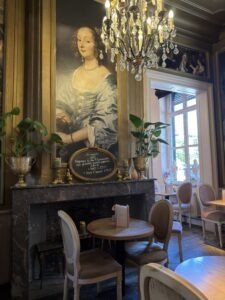
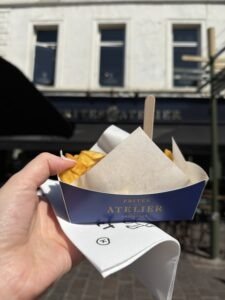
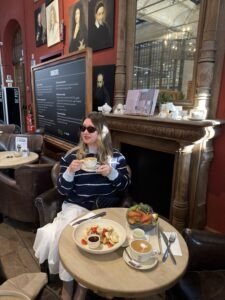
For food, I had Le Pain Quotidien, Atelier Frites, Meat Factory, Alice and Pakhuis on my list, and Patershol is also a great area to wander around when you want to stop for dinner without planning every single restaurant in advance. For chocolate I recommend Vanden Bouhede. Also we saw Steamywindows, that was fully booked and they couldn’t serve us, and I really regret we hadn’t a reservation.


I also took a canal cruise in Ghent. I normally love seeing European cities from the water, and here it is an easy way to get another view of the historic centre without adding even more walking to your day.
Start around Korenmarkt
After checking in, begin at Korenmarkt in the city center. From here, many of the best things to see in Ghent are only a short walk away.
Walk towards St Michael’s Bridge for one of the best views in the city. From the bridge, you can see Ghent’s famous towers and the beautiful architecture along the water.
Continue to Graslei and Korenlei. These historic quays sit along the River Lys and are lined with old guild houses. Ghent developed where the Lys and the River Scheldt meet, which is one good reason why water is such a big part of the city’s story.
The charming canals of medieval Ghent are beautiful at any time, but I especially liked this area later in the day. Find a good place by the canal, order a drink and give yourself some free time instead of filling every minute. Don;t forget to get to the Graffiti street.
Explore Patershol in the evening
For the rest of the day, walk through Patershol, one of Ghent’s oldest areas. Its narrow lanes are a great place to explore without a strict route.
You can finish with Belgian beers, French fries or dinner near the historic center. Ghent is also lovely after dark, when many of its historic sites and bridges are illuminated.


Day 2: The best things to do in Ghent
Your second day is for Ghent’s major landmarks. Start early so you have plenty of time for the cathedral, castle and a boat ride without rushing.
See the Ghent Altarpiece at St. Bavo’s Cathedral
Begin at St. Bavo’s Cathedral, home to the Ghent Altarpiece, also called The Adoration of the Mystic Lamb. Created by the Van Eyck brothers and unveiled in 1432, it is one of the city’s most important works of art.
The cathedral itself is free to enter, but visiting the Ghent Altarpiece requires a ticket at extra cost. Book a timed entry in advance, especially during peak season. The visitor experience includes more context about the work, so allow enough time rather than trying to fit it into ten minutes.
Climb the Belfry tower
The Ghent Belfry is part of a UNESCO World Heritage Site and offers panoramic views across the city. It is a good place to understand how close the major landmarks are to each other.
If you only want to pay for one high viewpoint during your Belgium trip, compare this with the Belfry tower in Bruges and choose the one that fits your schedule best.
Visit Gravensteen Castle
Gravensteen Castle, also known as the Castle of the Counts, is a real medieval fortress in the middle of Ghent. If you enjoy medieval castles, this is one of the best places on the route.
The visit includes an audio tour with stories about the castle’s history. Go up to the roof for more city views, but wear shoes that can handle narrow steps and uneven surfaces.


Take a canal boat tour
A canal boat tour is a great way to see Ghent from a different angle and rest your feet. Several companies run guided canal cruises through the historic center. Routes and duration vary, so check what is included before choosing your boat ride.
A guided tour can help you notice details you might miss on your own. If you prefer to explore independently, a walking tour followed by the boat is also a good combination.
Afterwards, see Graffiti Street and return to Graslei for a final drink by the canal. Do not plan every hour. Ghent is best when you leave some room to stop wherever looks interesting.
Day 3: A full day in the storybook city of Bruges
Bruges is often called the Venice of the North because of its canals, although the city has its own very different character. Its market square, Gothic architecture and quiet corners make it one of the best places to visit in Belgium.
Take an early train from Ghent to Bruges. Getting from Ghent to Bruges by train is incredibly easy. The journey takes around 25 minutes, which is one of the reasons Belgium works so well for a short trip without renting a car. From Bruges train station, it is roughly a 15 to 20-minute walk to the historic center, depending on your route and pace. You can also use local public transportation.


Bruges Quick overview
Bruges ended up being the place I most underestimated on this trip. Before going, I thought one full day would be enough. After visiting, I would personally give it more time, especially if you want to enjoy the city early in the morning and in the evening after many day-trippers have left.
Some of the places I had on my Bruges route were Minnewater, Rozenhoedkaai, Markt Square, the Adornes Domain and a canal boat trip.
If you love chocolate, The Chocolate Line was my personal favourite of the chocolate shops I tried. Dumon is very popular and definitely convenient to visit while exploring the centre, but personally I wouldn’t put it above The Chocolate Line.
For waffles, Otto Waffle Atelier is worth saving if you want to try something a little different from the classic Belgian waffle. Their waffles are lighter and have their own style, so I wouldn’t use them as your only waffle experience in Belgium, but I would absolutely add one to the list. My personal favorite waffles during this trip were waffles from Dukes Waffles.
The Old Chocolate House is another fun stop, especially if you want a break from sightseeing and something very chocolate-heavy.
For drinks, I had De Garre on my list, and if you are interested in Belgian beer, you can also visit De Halve Maan brewery.
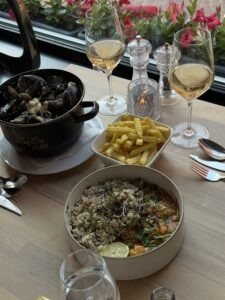
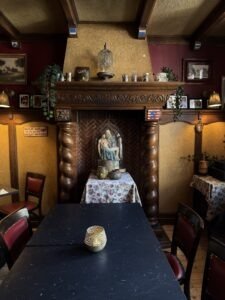
For lunch we choose Cafe Vlissinghe, the oldest pub in Bruges and for dinner we get to De Gastro (to be sure you can have a meal there make a reservation).






Begin at the Grote Markt
Start at the Grote Markt, usually called Markt in Bruges. This is the city’s main square and the easiest place to understand the layout of the historic center.
The Belfry dominates the market square. If you want to climb it, go early because entry slots can fill and the stairs are narrow. The reward is one of the best views over the roofs of Bruges.
Walk from Markt to Burg Square
Burg Square is only a short walk away. Here you will find Bruges City Hall and the Basilica of the Holy Blood. The lower chapel of the basilica has a simple Romanesque interior, while the upper chapel feels much more detailed.


This compact area is full of beautiful architecture, so give yourself time to look up rather than treating it as a checklist.
See Bruges from the canals
A canal cruise is one of the best things to do on a first visit to Bruges. The boat routes pass old bridges, gardens and medieval buildings that are harder to see from the street.
Then walk to Rozenhoedkaai, one of the city’s most famous views, and continue towards the Church of Our Lady. The church is known for its tall brick tower and Michelangelo’s Madonna and Child.
If you have enough time, add the Boniface Bridge and the old St John’s Hospital area. If not, keep the pace comfortable and enjoy the cobblestone streets around the canals.

Make time for waffles and chocolate
You cannot plan a Belgium itinerary without food stops. Bruges has many chocolate shops, and a chocolate tour is a fun option if you want more than a quick taste of Belgian chocolate. we get to The Old Chocolate House and tried their hot chocolate.
Also try Belgian waffles, but remember there are different styles. A Brussels waffle is usually light and rectangular, while a Liège waffle is denser and sweeter. For waffles I highly recommend Dukes Waffles, this was by far the best waffles we had in Belgium.


My biggest Belgium itinerary mistake
We visited Bruges as a day trip and did not stay overnight. That was my biggest mistake on this trip.
We did stay for a late dinner, which meant we saw the city after many visitors had left. The streets became quieter, the canals felt calmer and we finally had space around some of the busiest places.
Bruges is completely possible as a full day trip, but staying one night gives you a better chance to see it early in the morning and after dinner. If you can, sleep in Bruges and take the train to Brussels the following morning.
Day 4: Brussels historic center
Travel to Brussels and get off at Brussels Central Station if your hotel is near the old center. The capital is bigger and busier than Ghent or Bruges, so divide it into areas instead of crossing the city all day. The train from Bruges to Brussels takes roughly one hour, so you can easily travel in the morning and still have most of the day to explore Brussels.
Brussels Quick Overview
Brussels felt very different from Ghent and Bruges. It is bigger, busier and more spread out, so I would focus on the historic centre first and then add a few extra stops depending on how much time you have.
Start at Grand Place, then walk through Galeries Royales Saint-Hubert and continue towards Mont des Arts, Coudenberg Palace, the Royal Palace of Brussels and Parc de Bruxelles.
While walking around the centre, keep an eye out for Brussels’ famous comic murals. There are so many around the city that you will probably spot a few even without following the full comic book route.
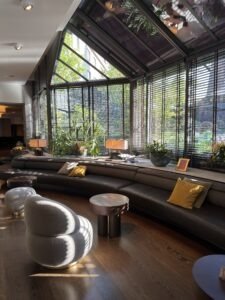
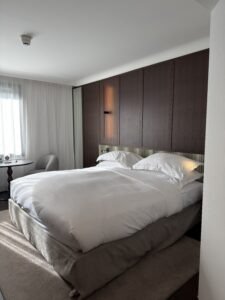
We stayed at Le Louise Hotel Brussels – MGallery Collection and really loved it. The location worked well for exploring Brussels, but my favourite part was definitely the Jardin Suspendu, the hotel’s hidden courtyard garden. It feels surprisingly calm considering you are right in the city, and I would absolutely stay here again.
For breakfast, we went to Lloyd Coffee Eatery, which was a really good start to the day.
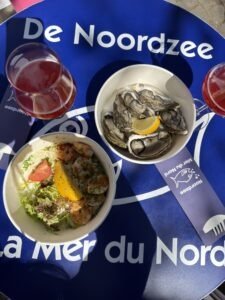
For lunch or something casual, La Mer du Nord was one of my favourite food stops in Brussels. If you love fish and seafood, this one is absolutely worth adding to your list.
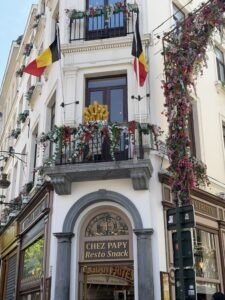
For fries, I would recommend Chouke, Chez Papy or Friterie Tabora. And while you are in Brussels, definitely try a pistolet, the traditional Belgian bread roll with different fillings.
If you want drinks with a view, go to Perché Rooftop. It is a great spot to add after a full day of sightseeing, especially if the weather is nice.
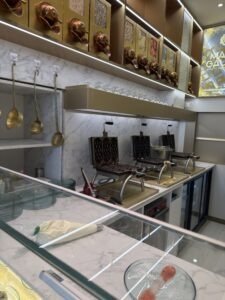
And of course, you cannot leave Brussels without trying a proper Brussels waffle and some Belgian chocolate. I would keep this part flexible and simply stop somewhere that looks good while exploring the centre. We had some waffles at Maison des Goufres.
If you still have time, you can add Parc du Cinquantenaire or the Atomium, but I would not try to squeeze everything into one day.
You can make a little game out of finding Brussels’ three famous “pis” statues: Manneken Pis, Jeanneke Pis and Zinneke Pis, all scattered around the city centre.








Start at Grand Place
Begin at Grand Place, Brussels’ main square and a UNESCO World Heritage Site since 1998. The Gothic City Hall and ornate guild houses make it one of the most impressive squares in Europe.
Grand Place becomes crowded quickly, so early morning is the best time for photos. It is also worth returning after dark.
From the square, walk through the Royal Galleries of Saint Hubert before heading to Manneken Pis. The statue is much smaller than many first-time visitors expect, but it is close enough to the main square that it is still worth visiting.

Try the Brussels classics
This is a good time for Belgian waffles, French fries and Belgian beers. The streets around Grand Place have plenty of tourist-focused shops, so compare a few places instead of entering the first one you see.
If food is a priority, a guided chocolate tour or a combined beer and chocolate tour can be a great way to learn more while tasting several things. Tours with expert guides usually cost extra, but they can save you from researching every stop yourself.
We has some French Fries at Chouke, than get some mussels and fish at La Mer du Nord and ate it in a lively square with others. If you want some fancy interios with good waffles go to Maison Des Gaufres.


Finish at Mont des Arts
Walk up to Mont des Arts for one of the best views in central Brussels. The gardens connect the lower city with the Royal Quarter, and the viewpoint is especially good near sunset.
If you still have enough time, visit the Magritte Museum nearby. It holds a major collection of work and archive material connected to René Magritte. Otherwise, save it for the next morning and enjoy the rest of the day at a slower pace.
Day 5: Museums, the Royal Quarter and Art Nouveau
For your final day, choose the side of Brussels that interests you most. Trying to combine every museum, park and neighbourhood will leave you with no free time.
Option 1: Art and the Royal Quarter
Start with the Magritte Museum, then see Place Royale, Brussels Park and the Royal Palace from outside. Public access to the palace is seasonal, so check the official website before your trip rather than assuming it will be open.
Continue to Sablon for cafés, chocolate shops and antique shops. This is a good place for a slower lunch before returning to the city center.
Option 2: Art Nouveau Brussels
Brussels is one of Europe’s best cities for Art Nouveau. For a self-guided route, explore Saint-Gilles and Ixelles. If you want to visit interiors such as the Horta Museum, reserve tickets and check opening days before building your schedule around them.
An architecture walking tour is a great way to understand the details and the people behind the buildings. It is also a nice contrast to the medieval architecture you saw in Ghent and Bruges.
Option 3: Parc du Cinquantenaire
For more open space, take public transportation to Parc du Cinquantenaire. Its gardens, triumphal arch and museums make it a good place to spend half a day. Nature lovers can use the park as a break between museum visits.
Some nearby museums have interactive exhibits, but choose only one if you have limited time. Finish the trip back at Grand Place, ideally after the lights come on.
Is this 5-day Belgium itinerary worth it?
Yes. Five days gives you a real taste of three very different cities without needing a car.
Ghent has the medieval fortress, canals and energy of a city people actually live in. Bruges gives you the storybook views, market squares and canal boat experience. Brussels adds major museums, Art Nouveau and the atmosphere of a vibrant capital.
My only change would be spending one night in Bruges. A day trip shows you the famous places, but an evening lets you enjoy the city after the crowds leave.
If I planned the route again, I would keep the same three cities, travel by train and make space for that one night in Bruges.
Planning your own trip? Save this 5-day Belgium itinerary and follow @sparklingescapes for more Europe itineraries and honest travel tips.


Hi, I’m Elena, the person behind Sparkling Escapes. I’ve been traveling since I was a child, but once I started planning my own trips, I saw how easily travel can become stressful. Sparkling Escapes came from wanting trips that include iconic places and quieter ones too, with a real plan that lets you see more and enjoy it better. Not days packed with endless “must-see” lists or running back and forth across a city. I plan by areas and neighborhoods, adding iconic cafés, restaurants, and hotels that add to the whole experience. I work a 9–5, and in the evenings I plan my next trip with too many tabs open and a notebook full of notes. If you like having a clear plan for your next trip, you’re in the right place.
Pingback: 20 Best Things to Do in Ghent, Belgium
Pingback: 20 Best Things to Do in Bruges, Belgium: Travel Guide