
If this is your first time in the Alsace region of France, Strasbourg and Colmar are the obvious places to start. Strasbourg is the biggest city in the region, while Colmar puts you closer to some of the most beautiful villages in Alsace. Moreover, together they form a great base for a short trip or a longer Alsace road trip.
But the smaller Alsatian villages between them are what make this trip especially worth doing. That is where you get the full wine-route experience, narrow cobblestone streets, working vineyards, and a slower atmosphere that the cities cannot quite match.
However, you can reach Strasbourg and Colmar by train. If you want to explore the villages, having a car becomes a must. Some villages have bus connections, but a car gives you flexibility to visit several in one day and stop wherever looks interesting.
I traveled here twice once in January and once during the Christmas season, so some of my observations come from Christmas season trip. Strasbourg and Colmar both have excellent Christmas markets, and the villages decorate heavily in December. If you are visiting outside Christmas, expect fewer crowds and a quieter atmosphere.
This blog post contains affiliate links. If you purchase something I’ve recommended, I’ll earn a small commission at no extra cost to you. I really appreciate your support and I hope this guide helps you ♡
- Alsace Trip Cheat Sheet
- Where to stay in Alsace
- How I Would Plan a Strasbourg, Colmar and Alsace Trip
- Strasbourg or Colmar: Where Should You Stay?
- Do You Need a Car in Alsace?
- Best Things to Do in Alsace: Strasbourg Highlights
- Strasbourg Christmas Markets
- Best Things to Do in Colmar
- Alsace Villages I Actually Visited
- More Beautiful Alsace Villages to Consider
- Final Thoughts
Alsace Trip Cheat Sheet
A quick plan for your first Alsace trip. The full guide below has more stops and day-by-day ideas.
At a glance
How long: Plan 4–6 days. With five days, spend two nights in Strasbourg and three in Colmar.
Getting around: Walk in both cities and take the train between them. A car makes it easier to visit several villages in one day; buses, tours and seasonal shuttles are alternatives.
Getting there: Strasbourg Airport suits a Strasbourg start; Basel–Mulhouse is convenient for Colmar. You can also travel from Paris by train.
Where to stay: Choose Strasbourg for the city and Christmas markets; Colmar is a handy base for Wine Route villages.
What to prioritize
Strasbourg: Cathedral and Petite France. Colmar: Petite Venise and the old town. Villages: Pick two or three, such as Riquewihr, Ribeauvillé and Obernai, instead of racing through every stop.
If you visit at Christmas
See the markets around Strasbourg Cathedral and Place Kléber, then explore Colmar’s old town. Visit popular villages on weekdays if you can, and book accommodation early.
Taste of Alsace
Try tarte flambée, kougelhopf and bredele at Christmas. For a local drink, look for Riesling or Crémant d’Alsace.
Where to stay in Alsace
For Christmas markets, a hotel in or beside each historic centre makes it easy to explore on foot.
Strasbourg hotels
Luxury: Hôtel & Spa Regent Petite France · Maison Rouge Strasbourg Hotel & Spa · Pavillon Régent Petite France
Boutique: Hôtel Les Haras · Hôtel Léonor · Hôtel Cour du Corbeau Strasbourg
Colmar hotels
Luxury and boutique: L’Esquisse Hotel & Spa · La Maison des Têtes
Charming stays: James Boutique Hôtel · Hôtel Le Colombier
If you’re combining Alsace with a few days in Paris, you can also check my 40 best things to do in Paris before planning your train to Strasbourg. In addition, for more on Paris, see other articles:
👉5 day itinerary in Paris: your ultimate guide
👉20 Most Instagrammable Cafés, Restaurants, Bars in Paris
👉20 best hotels with Eiffel tower view for all budgets
How I Would Plan a Strasbourg, Colmar and Alsace Trip
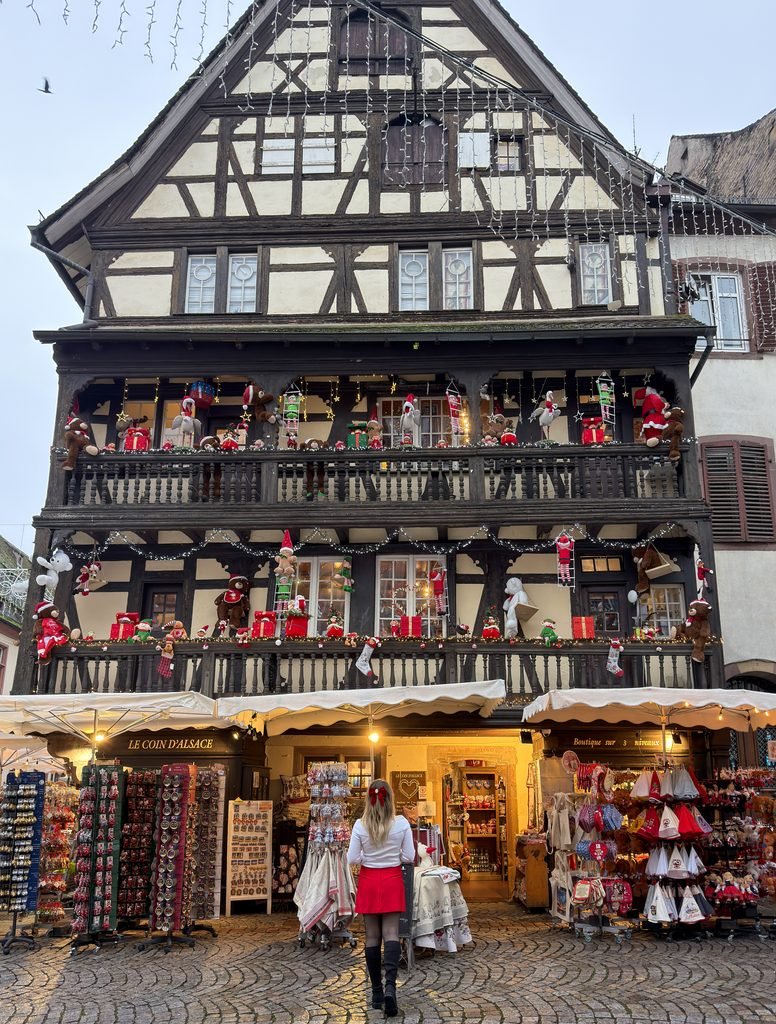
If you have just 3 days, I’d keep it simple: spend Day 1 in Strasbourg, Day 2 in Colmar, and use Day 3 for two villages along the Alsace Wine Route, such as Eguisheim and Kaysersberg.
With 4 days, add a second village day and combine Ribeauvillé and Riquewihr, since they’re very close to each other.
If you have 5 days, give Strasbourg and Colmar a little more breathing room and add either Obernai or Haut-Koenigsbourg Castle. This gives you a much better mix of cities, villages and the Alsace Wine Route without trying to squeeze everything into one day.
Please, do not try to pack every village into one day. Pick two or three that fit your route and give yourself time to walk around, sit down for a tasting, and enjoy the atmosphere.
Strasbourg or Colmar: Where Should You Stay?
First of all, both Strasbourg and Colmar are easy to reach by train, including connections from Paris and Basel.
Strasbourg is the bigger city and has better transport connections, so it works particularly well as your first or last base. You’ll also find more restaurants here, while the Christmas markets are some of the biggest in the region. If you are traveling mainly by train, Strasbourg is usually the more convenient choice.
Guided tours in Strasbourg:
Strasbourg on Foot: Historic Center and Petite France with a Local Guide
From Strasbourg: Black Forest Day Trip to Freiburg, Titisee, Triberg
From Strasbourg: Best Of Alsace Historical Day Trip
Colmar, meanwhile, is smaller and closer to many of the villages along the Alsace Wine Route. For anyone planning to explore by car, it makes a very practical second base. The Old Town is compact, so once you arrive, most of the main sights are easy to reach on foot.
Both cities are worth visiting. In fact, if you have four or five days in Alsace, I would split your stay between them rather than choosing only one.
Do You Need a Car in Alsace?
Not for Strasbourg and Colmar. Frequent trains connect the two cities in around 30 minutes, and both historic centers are very walkable.
However, a car becomes much more useful once you start exploring the smaller Alsatian villages along the Route des Vins d’Alsace. Some villages have bus connections from Colmar, but driving gives you more flexibility, especially if you want to combine two or three places in the same day.
Best Things to Do in Alsace: Strasbourg Highlights
Strasbourg sits right on the German border and shows it. The architecture, the food, the bilingual street signs, it all reflects centuries of switching between French and German control. Strasbourg’s mix of French culture and German influences is one of the first things you notice, from its food to the historic houses around the city center. The city also sits close to the German border and is home to the European Parliament.
1. Explore Petite France in Strasbourg, Alsace
La Petite France is the historic tanners’ quarter. The houses have large attics with open windows because tanners needed airflow to dry hides. Now those same rooflines make this one of the most photogenic parts of Strasbourg.
The canals reflect the half-timbered houses, especially in early morning or late afternoon when the light is softer. The main canal path gets crowded, so taking side streets like Rue du Fossé-des-Tanneurs or Rue des Moulins gives you quieter views of the same architecture.


Nearby, Barrage Vauban sits at the edge of La Petite France and is another easy stop. Its rooftop terrace is free and offers a wide view over the canals with the cathedral visible in the distance.


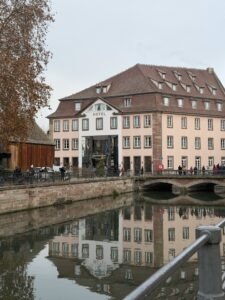
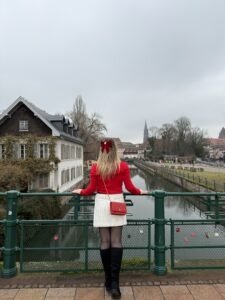
Plan at least an hour to walk through La Petite France, more if you stop for a drink or meal along the way. If you want to get the best photos get early in the morning.
2. Visit Strasbourg Cathedral
Strasbourg Cathedral was the world’s tallest building for more than 200 years. Its single spire reaches 142 meters, while the façade has incredibly detailed stone carvings and a massive rose window.
Inside, you can see the stained glass dating back to the 12th and 13th centuries. The astronomical clock was built in the 1500s and rebuilt in the 1800s. At 12:30 PM daily, moving figurines activate. Get there by noon if you want a good viewing spot.
For one of the best views in Strasbourg, you can also climb 332 steps to the cathedral platform. I did this on my first visit and absolutely loved it. The staircase is narrow and winding, but on a clear day you can see across the city toward the Vosges Mountains and Germany.
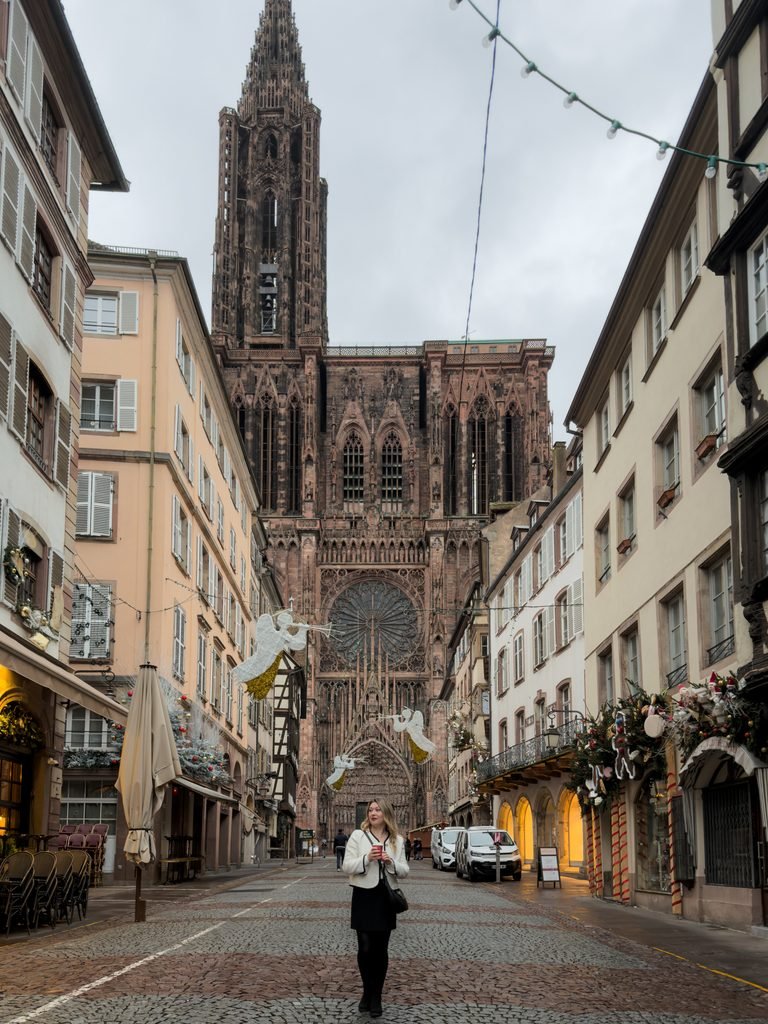
Just outside, Place du Château surrounds the cathedral. Maison Kammerzell, built in 1427, sits directly across from the cathedral entrance. It is now a restaurant, but the carved wooden façade is worth looking at regardless. We also had lunch there and enjoyed it.
3. Explore Grande Île and the Historic Center, Alsace
Grande Île is essentially Strasbourg’s historic town center and a UNESCO World Heritage site, surrounded by the Ill River. It is an easy walk from La Petite France, the cathedral and Place Gutenberg, so I would group all of them together on your first day. While exploring, do not skip the smaller streets around the cathedral. Rue du Maroquin, Rue du Fossé-des-Tanneurs and Place du Château are all lined with medieval and Renaissance buildings.
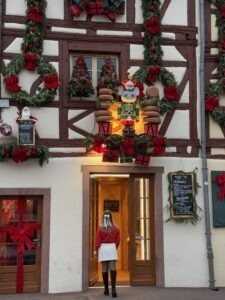
At Christmas, look for the teddy bear-covered façade of Le Tire-Bouchon on the corner of Rue du Maroquin and Rue des Tailleurs de Pierre. The exact address is 5 Rue des Tailleurs de Pierre. I went back to see it after dark too.
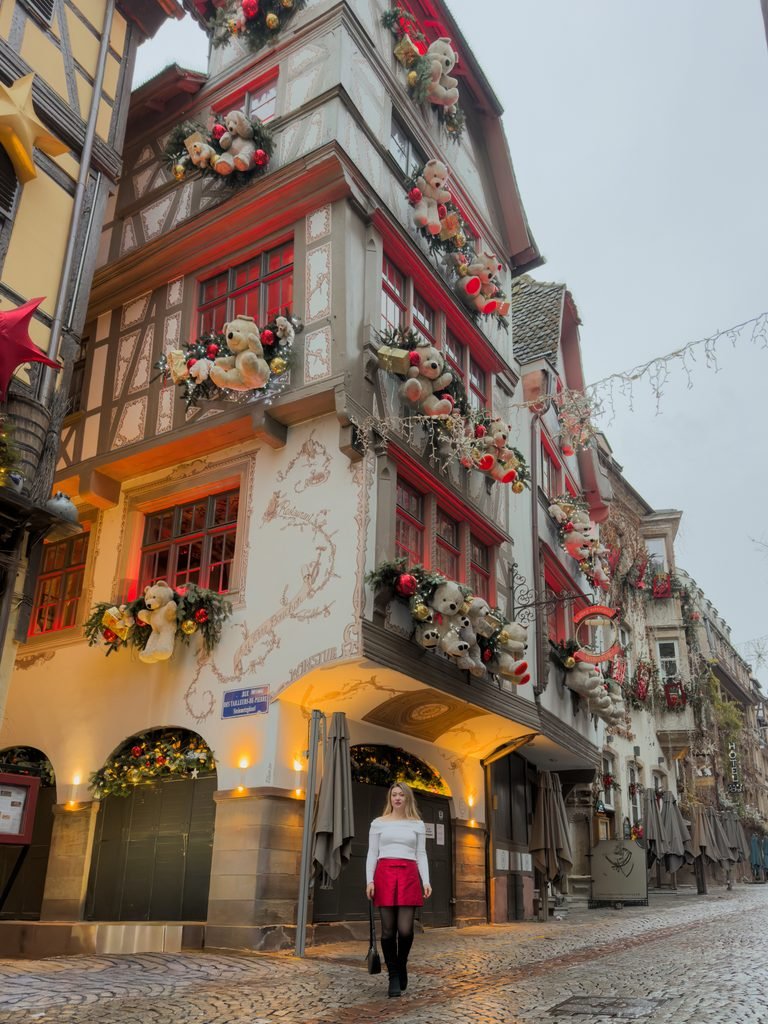
Another worthwhile stop is, Palais Rohan, an 18th-century palace that now houses three museums. During my Christmas visit, it was surprisingly quiet because most visitors were outside exploring the markets. Even if you do not have time for a museum, the palace itself is worth seeing.


Allow around an hour to explore the surrounding streets at a steady pace. However, you will need longer if you want to stop for photos, shopping or one of the museums.
Strasbourg Christmas Markets
4. Visit Strasbourg Christmas markets if traveling in season
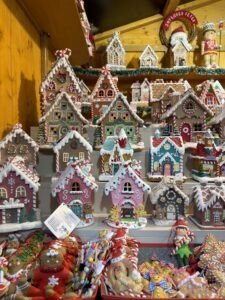
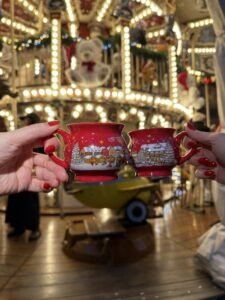
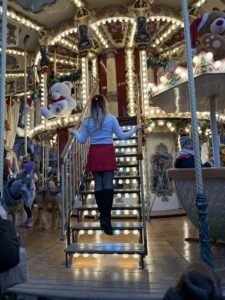
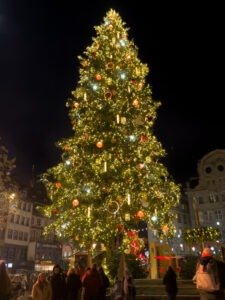
If you’re looking for one of the oldest and largest Christmas markets in Europe, Strasbourg should be high on your list. The markets are spread across the historic center rather than concentrated in one spot, so it makes more sense to combine them with sightseeing rather than treating them as a single destination.
The main market is at Place de la Cathédrale, while The Christkindelsmärik at Place Broglie is one of the largest. OFF Market at Place Grimmeisen focuses on local artisans and has a different feel than the traditional markets. Other markets are at Square Louise Weiss, Place du Marché-des-Poissons near Palais Rohan, Place Gutenberg, Place du Temple-Neuf, and Place Saint Thomas.
The markets run from late November through December. Strasbourg gets extremely busy during this period, so book accommodation well in advance. Strasbourg’s Christmas markets this year runs from 27th November to the 24th December 2026.


5. Try Food and Drinks in Strasbourg
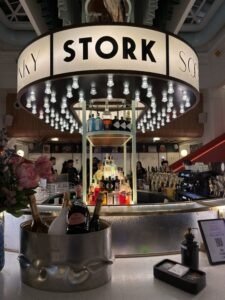
You can found several good options for traditional Alsatian food like Maison Kammerzell, La Hache, Cour du Corbeau, and The Drunky Stork (for more modern cuisine and great oysters). All of them are solid choices with different atmospheres.

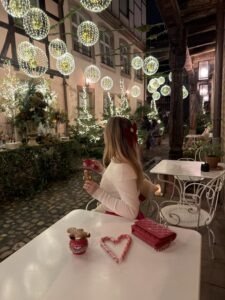

For a more traditional winstub experience, Chez Yvonne and Le Clou are both good choices. You should definitely try a winstub at least once in Alsace. These cozy, wood-paneled restaurants focus on regional dishes like choucroute garnie, tarte flambée, and baeckeoffe. Pair your meal with an Alsatian wine such as Riesling, Gewurztraminer, or Pinot Blanc.
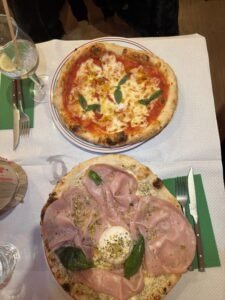
And the most unusual choice for Strasbourg would be an Italian Restaurant le Rimini. We got there and had one of the best dinners of the trip. Their pizza was absolutely delicious. If you crave some Italian food during your trip to Alsace check this place.
Best Things to Do in Colmar
Colmar is a much smaller town than Strasbourg and closer to the wine-route villages, which is part of the appeal. Most of the main sights are an easy walk from each other, and the narrow streets, cobbled streets and colorful historic houses make the old town easy to explore without much of a plan. Petite Venise, or Little Venice, is one of the best-known parts of Colmar, that postcard perfect Alsace scenery you actually come for. A short boat trip is another way to see the area from a different perspective.
An early train from Strasbourg to Colmar takes about 30 minutes, making Colmar an easy day trip or a convenient second base. If you arrive by train, Colmar train station is around a 15-minute walk from the old town. You can buy train tickets between Strasbourg and Colmar in advance or at the station.
6. Explore Petite Venise
Petite Venise is Colmar’s most famous area. The Lauch River runs through rows of pastel-colored half-timbered houses, and the reflections on the water make it extremely photogenic.
Timing matters here. Between 10 AM and 4 PM, the narrow walkways along the canal get crowded. Early morning before 8 AM or evening after 7 PM are much quieter.
Pont Rue des Écoles offers one of the best views of the canal and the houses lining it. Quai de la Poissonnerie is another good stretch for photos.
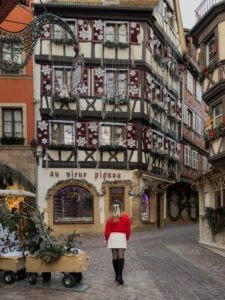


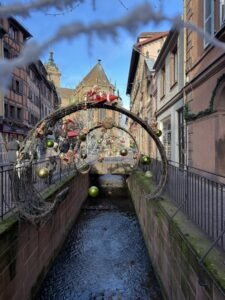

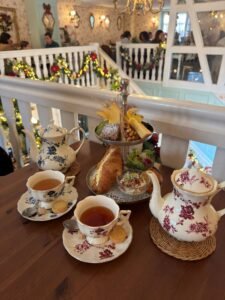
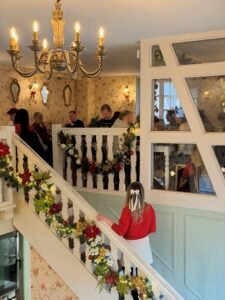
You can walk through Petite Venise in 30 to 45 minutes, longer if you are taking photos or stopping for a drink. I highly recommend to get to The Salon L’Artemise for a brunch.

7. Walk through Colmar Old Town
Colmar’s old town is walkable and concentrates most of the notable architecture within a small area. Pfister House, built in 1537, sits on Rue des Marchands and has a corner turret and painted façade that make it one of the most photographed buildings in Colmar.
St. Martin’s Church is a Gothic church in the center with an exterior more impressive than the interior. The Koïfhus, or Old Customs House, dates to 1480 and has a glazed tile roof that catches the light.
Marché Couvert is the covered market with local produce, cheese, and baked goods. Parc du Champ de Mars offers green space if you need a break from the half-timbered overload.
These sights are all close together. You can cover them in about an hour if you are moving, two hours if you are stopping to look around.
8. Visit Unterlinden Museum
The Unterlinden Museum sits in a 13th-century convent and holds the Isenheim Altarpiece by Matthias Grünewald. Painted in the early 1500s, the altarpiece depicts the crucifixion with striking intensity and detail. It was created for a monastery hospital where patients would view it as part of their treatment.
Beyond the altarpiece, the museum has a solid collection of medieval and Renaissance art, archaeological finds, and some modern pieces. The building connects the original convent structure with a modern extension.
Plan at least 90 minutes if you want to see everything. If you only have 30 minutes, go straight to the Isenheim Altarpiece.
Alsace Villages I Actually Visited
9. Ribeauvillé
Ribeauvillé feels more like a working small town than a tiny tourist village. Its town hall, historic center and remains of the medieval city gates make it worth at least a short stroll, although you can easily spend longer here. Above the town, three ruined castles sit on the hills, while the main street is lined with half-timbered houses.
The three castles, Saint-Ulrich, Girsberg, and Haut-Ribeaupierre, are one of the main reasons to spend extra time here. A hike to Saint-Ulrich takes about 45 minutes and leads to the best-preserved ruins. From there, you get views over the valley and the Vosges Mountains. However, the trail is rocky and steep in sections, so wear proper shoes.
Ribeauvillé is also known for the Geisberg Grand Cru, which produces mineral-driven Rieslings. Trimbach, one of the most recognized producers in Alsace, is based here. In addition, the village hosts the Pfifferdaj festival in September, one of the oldest festivals in Alsace.
Located about 20 minutes from Colmar, Ribeauvillé works especially well combined with Riquewihr, which is only a few minutes away.
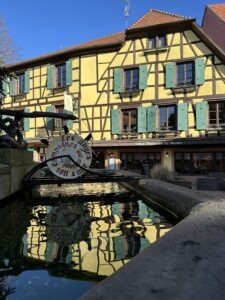


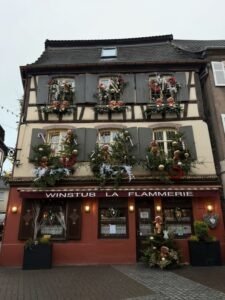

10. Riquewihr
Riquewihr is a tiny medieval town surrounded by vineyards and old city walls. Its colorful houses and cobbled streets are exactly what most people picture when they think of the cute villages of Alsace. It is also one of the most visually intact medieval villages in the region, with preserved ramparts and 16th-century houses.
However, Riquewihr is also one of the most visited villages on the wine route. Summer weekends and the Christmas market season can bring serious crowds.
If you visit, go early in the morning or later in the afternoon when many day-trippers are elsewhere. Instead of staying only on the main street, Rue du Général de Gaulle, continue toward the upper streets near the ramparts. Rue des Juifs and Rue Latérale are quieter but still have the same beautiful architecture.
At the village entrance, the Dolder Tower dates back to 1291. You can climb it for a view over the rooftops, although the staircase is narrow and steep.
Riquewihr also sits at the base of the Schoenenbourg Grand Cru vineyard, one of the top-rated sites in Alsace.
You can walk through the village in about 30 minutes when it is not crowded. However, add more time if you want to shop or stop for a wine tasting.
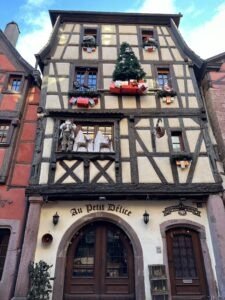

11. Obernai
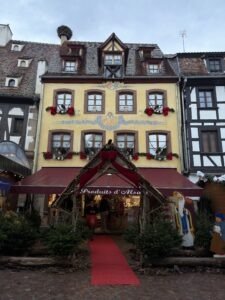
Obernai sits north of Colmar and closer to Strasbourg, so it works particularly well if Strasbourg is one of your bases. It also receives less tourist traffic than some of the more famous villages farther south.
At the center of town, Place du Marché is surrounded by half-timbered houses, fountains, and cafés. The Hôtel de Ville has a painted façade, while its bell tower dates back to the 13th century.
Compared with some of the more tourist-focused villages, Obernai feels more lived-in. For example, the weekly Thursday market fills Place du Marché with local produce, cheese, and baked goods.
The town is about 30 minutes from Strasbourg, making it a good half-day trip if you want a taste of the wine route without traveling all the way south.
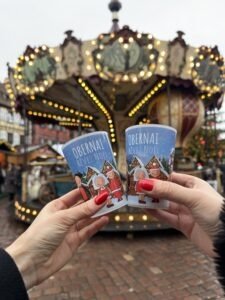
More Beautiful Alsace Villages to Consider
12. Eguisheim
Eguisheim won France’s favorite village in 2013. Built in concentric circles around a central square, it is compact enough to explore on foot in about 20 minutes by following the circular streets. Along the way, you’ll see pastel houses and flower boxes lining many of the windows.
This is also a serious wine village. Vineyards surround Eguisheim on three sides, and local winemakers produce Riesling, Gewurztraminer, and Pinot Gris.
From Colmar, the drive takes about 20 minutes. If you are visiting as a day trip, go early or later in the day to avoid the busiest midday hours.
I would plan two to three hours if you also want time for a wine tasting. Somehow, I managed to miss this place on both of my Alsace trips.
13. Kaysersberg
Kaysersberg won France’s favorite village in 2017 and is built around the Weiss River. A fortified bridge sits in the center, while castle ruins rise above the town. If you want to reach them, the hike takes around 15 minutes.
Along the main street, you’ll find half-timbered houses, bakeries, wine shops, and restaurants. Despite being popular with visitors, the village still feels functional because you can find everyday shops here too, not just souvenirs.
Another stop worth making is the Church of Sainte-Croix, a Gothic church with an altarpiece and stained glass. Afterwards, continue up to the castle ruins for views over the valley and the Vosges Mountains.
Wine is another major reason to visit. Domaine Weinbach and Domaine Marc Tempé are both based here.
Kaysersberg is about 20 minutes from Colmar, so it is easy to combine with another nearby village.
14. Turckheim
Turckheim sits just outside Colmar and, compared with some of the better-known villages, stays relatively quiet.
One of its most distinctive features is the three medieval gates marking the entrances to the old town: Porte de France, Porte de Munster, and Porte du Brand. From May to October, you can also see the town crier walking the streets at 10 PM, continuing a tradition from the Middle Ages.
Wine lovers have another reason to stop here because Turckheim is home to the Brand Grand Cru vineyard. Domaine Zind-Humbrecht, one of the most respected producers in the region, is also based here, so consider booking a tasting if Alsatian wine is a priority.
The historic center is very compact. In fact, you can walk from one gate to another in about 10 minutes.
Best of all, Turckheim is only about 10 minutes from Colmar.
15. Mittelbergheim
Mittelbergheim is a small wine village north of Colmar that many travelers miss.
Built into the hillside, its streets slope toward the surrounding vineyards. You’ll find classic Alsatian half-timbered houses here, while the village square has a fountain, a church, and several wine cellars.
Wine is one of the main reasons to stop. The Zotzenberg Grand Cru is the only Grand Cru in Alsace that allows Sylvaner, a grape usually considered entry-level. Here, however, the Zotzenberg produces Sylvaner with minerality and structure that challenges those expectations.
Unlike some of the more famous Alsace villages, you will not find tour buses, crowds, or rows of souvenir shops here.
If you are driving the wine route, Mittelbergheim is only a 10-minute detour. Consider stopping for a tasting if you have enough time.
Final Thoughts
You do not need to visit every village in Alsace. Pick Strasbourg, Colmar, and two or three villages that fit your route. Give yourself time to walk around, sit down for a meal, and enjoy the slower pace that makes this region worth visiting in the first place.


Hi, I’m Elena, the person behind Sparkling Escapes. I’ve been traveling since I was a child, but once I started planning my own trips, I saw how easily travel can become stressful. Sparkling Escapes came from wanting trips that include iconic places and quieter ones too, with a real plan that lets you see more and enjoy it better. Not days packed with endless “must-see” lists or running back and forth across a city. I plan by areas and neighborhoods, adding iconic cafés, restaurants, and hotels that add to the whole experience. I work a 9–5, and in the evenings I plan my next trip with too many tabs open and a notebook full of notes. If you like having a clear plan for your next trip, you’re in the right place.
Pingback: Best Photo Spots in Strasbourg: 20 Christmas Views
Pingback: Alsace Christmas Markets 2026: Strasbourg & Colmar