
If you’re planning 2 days in Naples, you’re probably wondering if the city is really worth visiting. After hearing so many mixed opinions, I asked myself the same question before my trip.
Out of all the Italian cities I’ve visited, the city of Naples surprised me the most. It’s loud, chaotic and full of life. The Historic Centre, a UNESCO World Heritage Site, is packed with narrow streets, buzzing markets, scooters, churches and some of the best street food you’ll find anywhere in Southern Italy. At first, it can feel overwhelming.
But that’s only one side of Naples.
As I explored beyond the Centro Storico, I discovered elegant squares, spectacular panoramic views over the Bay of Naples, beautiful historic buildings and quieter neighborhoods that felt completely different. Seeing both sides of the city is what made me fall in love with it.
This Naples itinerary is designed for first-time visitors who want to experience both. Over 2 full days, you’ll visit famous landmarks like Piazza del Plebiscito, the Royal Palace of Naples, Duomo di Napoli, San Gregorio Armeno, and the National Archaeological Museum, while also discovering some of my favorite viewpoints and restaurants. I’ve also included practical tips, restaurant recommendations, and ideas for a day trip to Pompeii, Sorrento or the Amalfi Coast if you have more time.
If you’re looking for the perfect balance between the city’s vibrant energy and its quieter, more elegant side, this guide will help you make the most of your 2 days in Naples.

Naples Cheat Sheet
How to get around
Naples is best explored on foot, especially around the Historic Centre, Chiaia and the waterfront.
- For longer distances, use the Metro, funiculars or taxis. Even if you’ll order an Uber, a taxi will came for you.
- Be extra careful when crossing streets. Traffic in Naples can be unpredictable, and scooters often pass very close to pedestrians.
- Walk around the Historic Centre (Centro Storico) to explore the main attractions.
- Metro Line 1 is the most useful line for tourists and includes the famous Toledo Station.
- Take the Funicular to reach Vomero and Belvedere di San Martino.
- Google Maps works well for walking and public transport.
How to get there (airports)
Fly into:
- Naples International Airport (NAP) – The city’s main airport and the best option for most visitors.
From the airport you can reach the city by:
- Rental car (only recommended if you’re planning day trips outside Naples)
- Taxi (around 20–30 minutes)
- Alibus Airport Shuttle to Napoli Centrale Station or Port.
Ideal trip length
2–4 days
- 2 days to see Naples’ main attractions and experience both the lively Historic Centre and the elegant side of the city.
- 3–4 days if you also want to visit museums, explore neighborhoods like Vomero and Posillipo, or take a day trip to Pompeii, Capri, Sorrento or the Amalfi Coast.
Must-see places
- Piazza del Plebiscito
- Royal Palace of Naples
- Duomo di Napoli (Naples Cathedral)
- Via San Gregorio Armeno
- Spaccanapoli
- Toledo Station
- Galleria Umberto I
- Teatro di San Carlo
- Castel dell’Ovo
- Castel Sant’Elmo
- National Archaeological Museum
- Complesso Monumentale di Santa Chiara
- Piazza Bellini Via dei Tribunali
Less-known places
- Quartieri Spagnoli side streets (beyond the Maradona murals)
- Belvedere di San Martino
- Palazzo Mannajuolo
- Chiaia district
- Posillipo
- Grand Hotel Parker’s terrace
- Lungomare Caracciolo
- Villa Floridiana
- Certosa di San Martino
- Borgo Marinari
Best food spots
Pizza
- Pizzeria e Trattoria del Purgatorio
- L’Antica Pizzeria da Michele
- 50 Kalò
- Concettina ai Tre Santi
- Starita
Traditional restaurants
- Gesù Vecchio Inn
- Tandem Ragù
- La Locanda Gesù Vecchio
- Mimì alla Ferrovia
Coffee & desserts
- Chalet Ciro
- Caffè Gambrinus
- Scaturchio
- Pintauro (for sfogliatella)
Top hotel picks
Luxury
- Grand Hotel Parker’s ★★★★★
- ROMEO Napoli ★★★★★
- Grand Hotel Vesuvio ★★★★★
- De Bonart Naples, Curio Collection by Hilton ★★★★★
- Grand Hotel Santa Lucia ★★★★★
Boutique Hotels
- Puro by Unico Relais ★★★★ (where I stayed and absolutely loved it)
- Relais Della Porta ★★★★
- Santa Chiara Boutique Hotel ★★★★
Best day trips
- Ischia
- Pompeii
- Herculaneum
- Mount Vesuvius
- Capri
- Sorrento
- Amalfi Coast boat tour
- Procida
Before You Visit Naples
Is Naples Worth Visiting?
Absolutely. If you’re looking for a polished city like Florence or Verona, Naples might not be what you expect. But if you want to experience authentic Southern Italy, rich history, incredible food and a city full of character, Naples is one of the best places to visit.
As one of the oldest cities in Europe, Naples has been shaped by the Ancient Greeks, the Romans, Spanish rulers and the Bourbon kings. Today, that history sits alongside busy markets, lively streets and everyday local life, creating a destination unlike any other Italian city.
The Historic Centre of Naples, also known as the Centro Storico, is a UNESCO World Heritage Site, while the city is famous as the birthplace of pizza. Add spectacular views over the Bay of Naples, with Mount Vesuvius rising in the background, and it’s easy to see why Naples is becoming one of Italy’s most popular destinations.
For me, Naples wasn’t love at first sight. But once I explored both its energetic streets and its quieter neighborhoods, I completely understood why so many people fall in love with it.
👉 Check out Best things to do in Rome in 3 days: Travel Guide
👉 2 Days in Venice Itinerary: What to See and Do



How Many Days Do You Need in Naples?
I recommend spending 2 full days in Naples, before you get to Amalfi Coast or to Capri.
That gives you enough time to explore the city’s main attractions, visit museums, enjoy the famous food scene and still experience the elegant waterfront and panoramic viewpoints.
If you have extra time, Naples also makes the perfect base for several unforgettable day trips, including:
- Pompeii
- Herculaneum
- Sorrento
- The Amalfi Coast
- Capri
If you only have one day, you’ll need to move quickly and skip a few attractions. With three or four days, you can combine this itinerary with one or two nearby destinations.
Where to Stay in Naples
Choosing the right neighborhood can completely change your experience in Naples. Every area has its own personality, so the best place to stay depends on what kind of trip you’re planning.
Historic Centre (Centro Storico)
Best for: First-time visitors who want to be surrounded by history.
The Historic Centre of Naples, a UNESCO World Heritage Site, puts you right in the heart of the city’s history. You’ll be within walking distance of many of Naples’ most famous landmarks, making it an excellent base if you want to explore mainly on foot.
Pros: Walking distance to San Gregorio Armeno, Duomo di Napoli, Via dei Tribunali and many excellent restaurants, the city’s most authentic atmosphere, easy access to public transport.
Cons: Can be noisy, busy and chaotic, especially during peak season. Some streets feel less polished than other neighborhoods.
Chiaia
Best for: Couples, food lovers and anyone looking for a more elegant stay. If I returned to Naples, this is where I’d stay again.
Chiaia feels completely different from the Historic Centre. Wide streets, beautiful architecture, boutique shops, excellent restaurants and easy access to the waterfront make it one of the city’s most enjoyable neighborhoods.
I stayed at Pure by Unico Relais, and honestly, it exceeded my expectations. It was beautifully designed, in a fantastic location, and I enjoyed it even more than some of better-known luxury hotels. If you like quieter neighborhoods but still want to be close to the main attractions, Chiaia is an excellent choice.
Vomero
Best for: Amazing views and a quieter local atmosphere. Perched on the hill above Naples, Vomero offers a completely different experience from the busy streets below.
This elegant residential neighborhood is home to Castel Sant’Elmo, Belvedere di San Martino, leafy streets, cafés and some of the city’s best panoramic views over the Bay of Naples and Mount Vesuvius.
It’s quieter, cleaner and feels more relaxed than the Historic Centre, while still being easy to reach thanks to the funicular and Metro Line 1.
If your idea of Naples includes beautiful viewpoints and peaceful evenings, Vomero is hard to beat.
Posillipo
Best for: Luxury stays and unforgettable sea views. Posillipo is easily my favorite part of Naples.
It’s known for elegant villas, luxury hotels, scenic coastal roads and breathtaking views over the Bay of Naples. It feels almost like a different city compared to the lively Centro Storico.
The downside is that it’s farther from the main attractions, so you’ll rely more on taxis or public transport. However, if you’re looking for a relaxing stay with incredible scenery, I think it’s one of the best areas in Naples.
Toledo & Quartieri Spagnoli
Best for: Visitors who want to experience Naples’ famous energy. If you enjoy lively neighborhoods full of restaurants, bars and local life, this is a great area to stay.
You’ll be close to Toledo Station, Piazza del Plebiscito, Galleria Umberto I, the Royal Palace of Naples and many of the city’s top attractions.
The Spanish Quarter (Quartieri Spagnoli) has become one of Naples’ trendiest neighborhoods. It’s vibrant, full of character and offers fantastic food, but it’s also busy. Expect scooters weaving through narrow streets, laundry hanging overhead and plenty of activity well into the evening.
Is Naples Safe?
This was probably the question I was asked most before visiting Naples. Overall, I found Naples to be safe (as we haven’t been out late at night), but like any large city, it requires a bit of common sense.
One thing that stood out to me was that some tourist areas had quite a few homeless encampments, and there were streets that didn’t always smell pleasant. That’s simply part of the city’s raw, unfiltered character, and it’s something to be prepared for.
Also, drivers in Naples can be incredibly fast and assertive. During one taxi ride, our driver got us to the destination in about 5 minutes instead of the 15 minutes Google Maps estimated. It definitely felt like an adventure! Scooters also weave through traffic and often pass very close to pedestrians, especially in the Historic Centre, so always look carefully before crossing, even if you think the road is clear.
Like any popular tourist destination, pickpocketing can happen in crowded places, particularly around the train station, on public transport, and near major attractions.
Despite Naples’ reputation, I never felt personally unsafe. For me, the city’s biggest challenge wasn’t crime, but learning to embrace its wonderfully chaotic rhythm. Once I did, it became one of the most memorable places I’ve visited in Italy.
Best Time to Visit Naples
The best times to visit Naples are April to June and September to October. During these months, you’ll enjoy pleasant temperatures, longer days and fewer crowds than during the busy summer season.
July and August bring very hot weather and larger crowds, while many locals leave the city for their holidays.
If you’re planning a day trip to Pompeii, Mount Vesuvius or the Amalfi Coast, spring and autumn offer the most comfortable conditions for sightseeing.
Day 1: Explore the Historic Centre of Naples
Start your first day in the Historic Centre of Naples, one of the oldest continuously inhabited urban areas in Europe and a UNESCO World Heritage Site. This is the heart of the city, where you’ll experience Naples at its most authentic.
The Historic Centre (or Centro Storico) is a maze of narrow streets, lively piazzas, historic churches and family-run shops. At its center runs Spaccanapoli, the famous street that appears to split the old city in two and connects many of Naples’ most important landmarks. As you wander through its streets, you’ll discover layers of history dating back to the Ancient Greeks and Roman times, alongside the vibrant daily life that makes Naples so unique.
Although it can feel chaotic at first, that’s exactly what gives Naples its character. Most of the city’s main attractions are within a short walk of one another, making this the perfect area to explore on foot during your first day.
Via San Gregorio Armeno
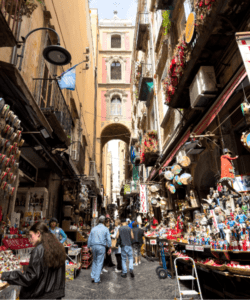
Your first stop should be Via San Gregorio Armeno, one of the most famous streets in Naples. This street is often called Christmas Street. It’s lined with workshops where local artisans handcraft traditional nativity scenes all year round. Alongside classic figures, you’ll also spot miniature versions of football players, celebrities and politicians, making every workshop unique.
Even if you’re visiting outside the holiday season, this street is one of the city’s most popular attractions and offers a chance to buy a cute souvenir.
Time needed: 20 to 30 minutes.


Duomo di Napoli (Naples Cathedral)
Just a 5-minute walk away is the Duomo di Napoli, also known as the Naples Cathedral.
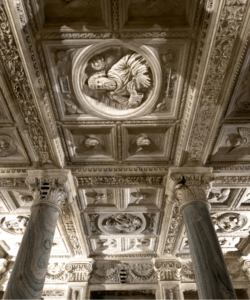
The cathedral is dedicated to San Gennaro, the city’s patron saint and it was built between the 13th and 14th centuries. Inside, you’ll find beautiful chapels, an impressive high altar, and the Chapel of the Treasure of San Gennaro, where one of Italy’s most famous religious traditions takes place.
Three times a year, thousands of locals gather to witness the Miracle of San Gennaro, when the saint’s dried blood is said to liquefy. Whether you’re religious or not, it’s one of Naples’ most fascinating traditions.
Admission to the cathedral is free, making it one of the best things to do in Naples. If you’d like to learn more about its history, you can also join a guided tour or rent an audio guide.
Time needed: 30 to 45 minutes.


Where to Eat the Best Pizza in Naples
You simply can’t visit Naples without eating pizza. Naples is also considered the birthplace of pizza. And of course Naples takes this dish very seriously. Traditional Neapolitan pizza is made with slow-fermented dough, San Marzano tomato sauce, fresh mozzarella and cooked for less than 90 seconds in a wood-fired oven.
Pizzeria e Trattoria del Purgatorio
This was my favorite pizza in Naples. Unlike some of the more famous restaurants, it felt less touristy while still serving an incredible traditional Neapolitan pizza. If you prefer discovering places loved by locals, I highly recommend stopping here for lunch.
L’Antica Pizzeria da Michele
No list of the best pizza in Naples would be complete without L’Antica Pizzeria da Michele. Honestly, it wasn’t my favorite, but the whole experience is totally worth it. Founded in 1870, it’s one of the city’s most famous pizzerias and became internationally known after appearing in Eat, Pray, Love. Expect long queues, especially during lunch, but if it’s your first visit to Naples, it’s definitely worth experiencing.
Pro tip: they have 2 locations, the one from the movie scene and another across the street. You should specify wich one you want to eat in.
Complesso Monumentale di Santa Chiara
After lunch, you should continue to the Complesso Monumentale di Santa Chiara. It’s definetly one of Naples’ most peaceful landmarks.
While the Gothic basilica is beautiful, the real highlight is its spectacular Majolica Cloister. It is covered with hand-painted ceramic tiles decorated with flowers, vines and rural scenes. For me this one was one of the most photogenic places in the city.
Time needed: Around one hour.
National Archaeological Museum
If you’re interested in Roman history, don’t miss the National Archaeological Museum, one of the finest archaeological museums in the world. Many of its treasures were discovered in nearby Pompeii and Herculaneum after the eruption of Mount Vesuvius in AD 79.
Inside, you’ll see remarkably preserved mosaics, frescoes, marble sculptures and everyday objects that offer an incredible insight into life during Roman times.
Also if you plan to take a day trip to Pompeii later, visiting the museum first helps bring the ancient city to life.
Time needed: 2 to 3 hours.
Toledo Station
As the afternoon comes to an end, go to Toledo Station. This one is often ranked among the most beautiful metro stations in Europe.
It was designed by Spanish architect Óscar Tusquets Blanca. The Toledo station is famous for its blue mosaic ceiling, known as the “Crater de Luz,” which creates the illusion of descending beneath the sea.
Even if you don’t need to use the Metro Line, it’s well worth making a quick stop for a few photos.
Time needed: 10 to 15 minutes.
Dinner at Gesù Vecchio Inn
Finish your first day with dinner at Gesù Vecchio Inn, one of my favorite restaurants in Naples. It is located just a short walk from Piazza del Gesù Nuovo, it serves traditional Neapolitan dishes in a cozy space without feeling touristy.
After a full day exploring the city’s historic streets, it was the perfect place to enjoy an authentic meal before heading back to the hotel.
Pro tip: a reservation is mandatory, even in low season the place was fully reserved.
Day 2: Discover Naples’ Elegant Side
If Day 1 introduced you to the chaotic streets and historic atmosphere of the Centro Storico, Day 2 is all about discovering a completely different side of the city.
Today you’ll explore elegant piazzas, royal palaces, historic cafés and some of the best panoramic views over the Bay of Naples. It’s quieter, more refined and, personally, this is the side of Naples that completely won me over.
Breakfast at Parker’s Hotel
Start your morning with breakfast at Grand Hotel Parker’s, one of Naples’ most elegant hotels. Even if you’re not staying here, breakfast is worth booking for the incredible terrace overlooking the Bay of Naples, with Mount Vesuvius rising in the distance. It’s one of the most beautiful ways to begin your second day and one of my favorite views in the city.
If the weather is clear, this is also one of the best photo spots in Naples.
Time needed: Around one hour.
Piazza del Plebiscito
After breakfast, go to Piazza del Plebiscito, the largest and most famous square in Naples.
It is surrounded by historic buildings and it’s home to the Royal Palace of Naples on one side and the magnificent Basilica of San Francesco di Paola on the other. Unlike the busy streets of the Historic Centre, this open square feels calm and spacious.
Take a few minutes to walk across the square and enjoy the atmosphere before continuing your itinerary.
Royal Palace of Naples
Overlooking Piazza del Plebiscito, the Royal Palace of Naples was once home to Spanish viceroys and the Bourbon kings who ruled southern Italy.
Inside, you’ll discover royal apartments, grand staircases and beautifully decorated halls. Every room is filled with paintings, tapestries and antique furniture. They even have a theatre inside the buiding.
One thing many visitors miss is the palace’s outdoor terraces. Don’t skip them. Tip: you shoud buy separate tickets for them and you have 15-20 minutes slot for visiting it. The terraces offer wonderful views over the square, the city and the waterfront, making them one of my favorite photo spots inside the palace.
Honestly this is one of the best places to visit in Naples. If you have just a few hours in Naples and can visit just one place, visit this one.
Time needed: Around 1.5 hours.
Teatro di San Carlo
Right next to the palace is Teatro di San Carlo, the oldest continuously operating opera house in the world.
It was opened in 1737, before famous La Scala in Milan and La Fenice in Venice. Even if you’re not planning to attend a performance, it’s worth joining a guided tour. You’d be able to admire its magnificent auditorium, royal boxes and lavish interior.
The visit takes less than an hour and offers a fascinating glimpse into Naples’ cultural history. Pro tip: you should make a reservation for a guided tour through email. When we visited the city, unfortunately we haven’t visited it inside because there were activities for schools.
Caffè Gambrinus
Just across the square is Caffè Gambrinus, one of Naples’ most historic cafés. Dating back to the 19th century, its beautifully decorated rooms have welcomed writers, artists and politicians for generations.
It’s the perfect place to take a short break with a traditional espresso or one of Naples’ famous pastries. We stopend here for sandwiches, coffe and desserts, everything was delicious.
Palazzo Mannajuolo
One of Naples’ lesser known architectural places is Palazzo Mannajuolo. From the outside, the building looks fairly ordinary. But step inside and you’ll discover one of the city’s most spectacular staircases. Its elegant Art Nouveau design and sweeping marble staircase have made it a favorite among photographers.
Since it’s a residential building, remember to visit respectfully.
Galleria Umberto I
Continue to Galleria Umberto I, a beautiful 19th-century shopping arcade inspired by Milan’s famous Galleria Vittorio Emanuele II.
Its enormous glass dome, ironwork and mosaic floors make it one of Naples’ most elegant landmarks. Even if you don’t plan to shop, it’s well worth walking through to admire the architecture.
Take the Funicular to Vomero
One of the most enjoyable ways to reach the Vomero district is by taking the historic Funicular. The short ride saves you a steep uphill walk while offering a fun experience and easy access to some of Naples’ best viewpoints.
It’s a practical way to experience the city’s public transport while reaching one of its most beautiful neighborhoods.
Belvedere di San Martino
If I had to choose just one viewpoint in Naples, this would be it. Belvedere di San Martino offers breathtaking panoramic views over the Bay of Naples, the rooftops of the historic center, Castel dell’Ovo, the waterfront and Mount Vesuvius in the distance.
We accidentaly found caffe RenzoELucia and enjoyed the views with some aperol spritz.
Compared to the lively streets below, the atmosphere here feels peaceful and relaxed. It’s the perfect place to pause, take in the view and appreciate just how diverse this city really is.
Dinner at Pepe in Grani
End your trip with one last unforgettable pizza at Pepe in Grani. Often considered one of the best pizzerias in Italy, it’s located in the nearby town of Caiazzo, about an hour from Naples by car. If you have a rental car or don’t mind the journey, it’s an incredible experience for pizza lovers. We took a tran to Caiazzo and a local driver to get back to Naples. I’ll make a separate post about this restaurant as it was the main reason why we got to Naples.
Reservations are essential and should be made well in advance, as tables often sell out weeks ahead.
If you don’t have time to visit Caiazzo, simply enjoy another traditional Neapolitan pizza in the city. After all, you’re still in the birthplace of pizza, and it’s hard to go wrong.
Final Thoughts
Naples wasn’t love at first sight for me. It was loud, chaotic and unlike any other city I’d visited in Italy. But the more I explored, the more I realized that’s exactly what makes it so special. I honestly needed a raw and unfiltred city in my travel bank.
One moment you’re wandering through the lively streets of the Historic Centre, surrounded by scooters, markets and centuries of history. The next, you’re standing at Belvedere di San Martino, looking out over the Bay of Naples, wondering how two completely different worlds can exist in the same city.
If you’re planning 2 days in Naples, don’t just visit the famous landmarks. Take the time to experience both sides of the city. Discover the chaotic Centro Storico, then go to neighborhoods like Chiaia, Vomero or Posillipo to see a more elegant Naples. That’s what completely changed my opinion of the city.
I hope this Naples itinerary helps you make the most of your trip and shows you why Naples deserves a place on your Italy itinerary.


Hi, I’m Elena, the person behind Sparkling Escapes. I’ve been traveling since I was a child, but once I started planning my own trips, I saw how easily travel can become stressful. Sparkling Escapes came from wanting trips that include iconic places and quieter ones too, with a real plan that lets you see more and enjoy it better. Not days packed with endless “must-see” lists or running back and forth across a city. I plan by areas and neighborhoods, adding iconic cafés, restaurants, and hotels that add to the whole experience. I work a 9–5, and in the evenings I plan my next trip with too many tabs open and a notebook full of notes. If you like having a clear plan for your next trip, you’re in the right place.
Pingback: 5 Days in Belgium: Ghent, Bruges & Brussels by train